
Our Good Dogmanship blog series explores the everyday choices, habits, and perspectives that help us better understand the dogs in our lives and build stronger relationships with them. Jennifer Thurman, Regional Puppy Instructor for Guiding Eyes’ North Carolina Puppy Raising Region, shares her perspective on finding the right balance between the work we ask of our dogs and the opportunities we give them to simply be dogs.
What does it mean to let a dog just be a dog?
That is a question I come back to often when I think about Good Dogmanship.
Good Dogmanship begins, in part, with recognizing that we ask dogs to live in a world designed largely around human expectations. Part of our responsibility is making space for the things that matter to them, too.
A healthy balance between work and play starts with understanding what it actually means to be a dog. Dogs naturally explore the world through their senses, movement, play, and social connection. They sniff, chase, tug, wrestle, run, chew, dig, and rest, while also exercising autonomy, or the ability to make some choices for themselves. Yet throughout a typical day, we may ask them to suppress many of those natural behaviors.
Finding balance means creating appropriate, predictable opportunities for our dogs to do some of those things simply because they are dogs.
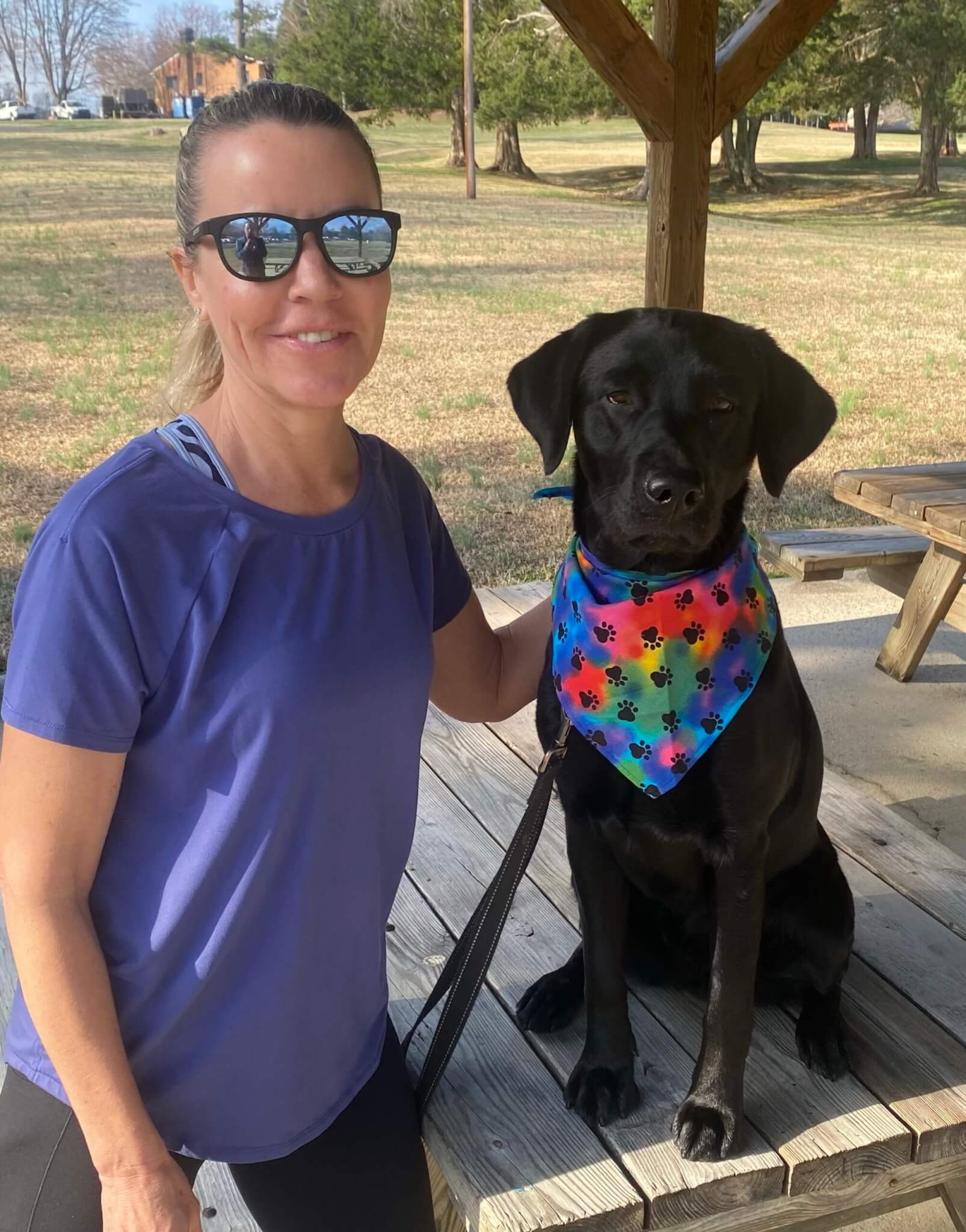
Play is important for every dog, but I think it is especially important for dogs who are learning or doing serious work.
For our future guide dogs, play gives them an opportunity to relieve stress, maintain motivation, and avoid burnout. Having the chance to blow off steam does not compete with learning an important job. It can actually help a dog stay engaged and enthusiastic about that work.
The same idea can apply to any dog. We do not have to choose between structure and fun, or between learning and letting a dog be a dog. Both have value.
In fact, structure itself can be incredibly helpful. Dogs thrive on predictability. They can learn that one kind of walk means they have the freedom to sniff and explore, while another situation means it is time to stay closer and focus. They can learn what is expected of them and trust that there will also be opportunities for their other needs to be met.
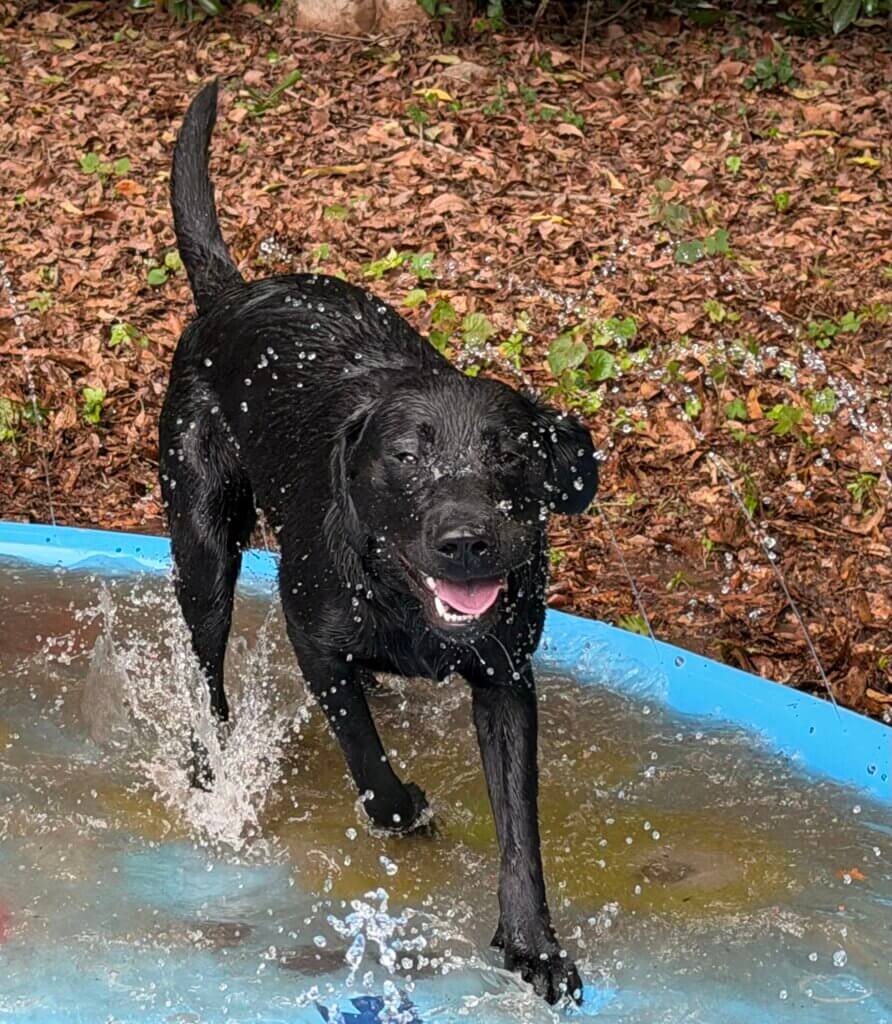
The right balance between work and play will look different for every dog.
Age and developmental stage are major factors. Young puppies need a lot of sleep and can only sustain mental and physical work for relatively short periods. As they mature, their capacity for activity and focus increases, while factors like self-regulation and emotional maturity continue to develop.
Temperament matters, too. Dogs differ in their energy levels, sensitivity, comfort in different environments, and ability to handle stimulation. The humans caring for them also have different schedules and different capacities to support a dog when they become overwhelmed.
Rather than trying to achieve one ideal ratio of work to play, I encourage people to pay attention to the individual dog in front of them.
Sometimes a dog will tell you they need a break. Sudden changes in behavior, difficulty focusing, zoomies, mouthiness, barking, jumping, whining, or becoming withdrawn can all be signs that a dog may need more rest or downtime.
“Wait, aren’t zoomies a sign that a dog is happy?” Sometimes! We often associate those sudden bursts of running with fun and play, and that can absolutely be what they mean. But zoomies can also be a way for a dog to release built-up excitement, energy, or stress after an intense or stimulating experience. As with so many dog behaviors, context matters.
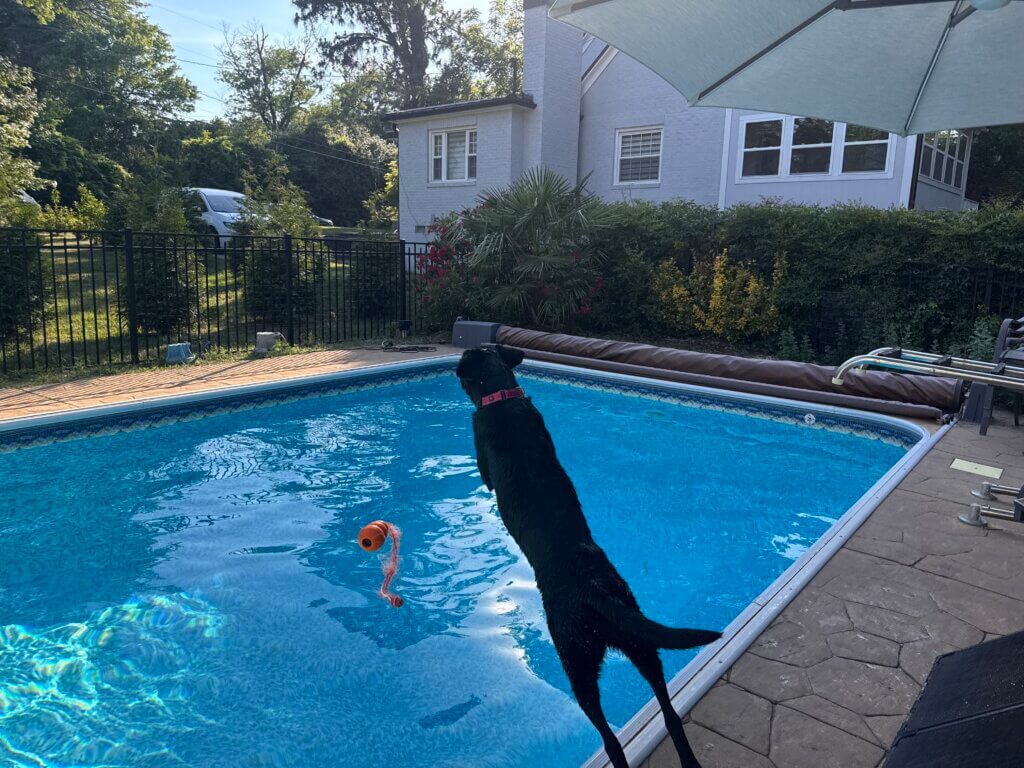
This is something we talk about frequently in puppy raising.
It is easy to look at a day full of activities and think, “What a great day for this puppy!” Maybe there is a walk in the morning, followed by a training session, an outing, a pack walk, and puppy class that evening.
To a human, that can look productive. For a young puppy, though, it may simply be too much.
We have to be mindful of cognitive load, or how much we are asking a puppy to take in and process. Without built-in opportunities for rest, decompression, and play, puppies can struggle.
One of the Puppy Raisers in my region was recently standing in her front yard with her puppy when a neighbor drove by and told her, “You can’t let that puppy sniff because guide dogs aren’t allowed to sniff.”
Not only is that untrue, but consider what we would be asking of that puppy. Smell is one of a dog’s primary ways of experiencing the world. Imagine being told you could never use one of your primary senses simply because you had an important job to do.
Guide dogs and future guide dogs work hard, but their lives are not all work. Off duty, they have time to sniff, play, explore, rest, and simply be dogs.
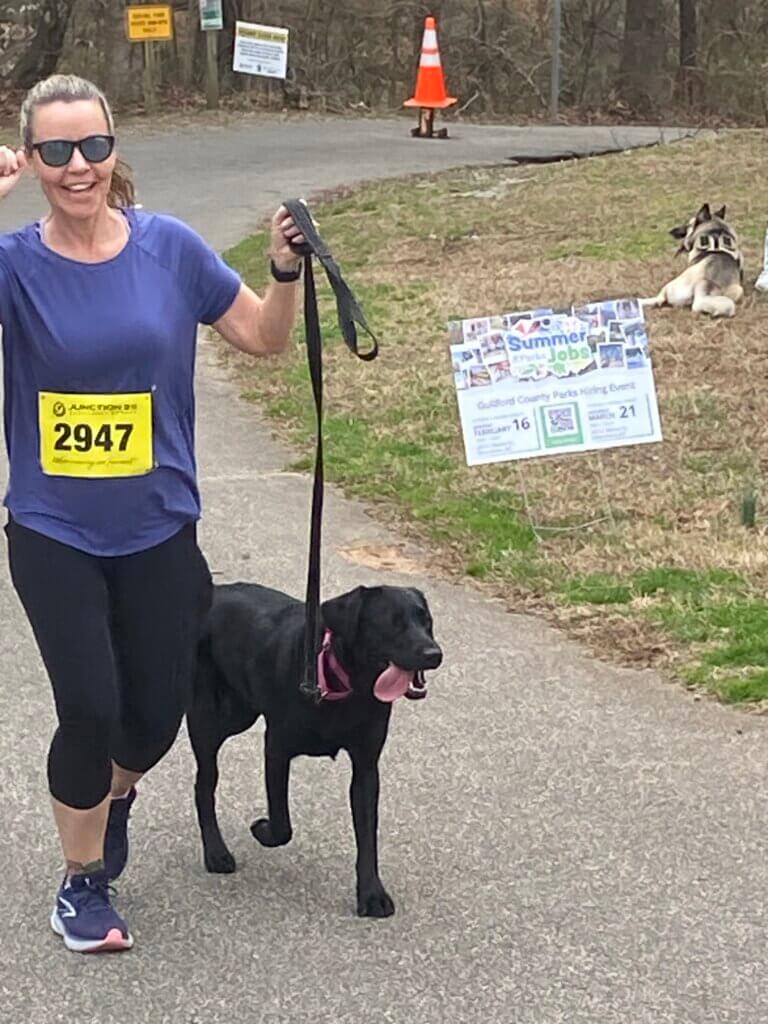
Sometimes finding balance is simply a matter of recognizing how much we have already asked of a dog that day.
I recently brought the puppy I am raising to a conference where she needed to settle quietly by my feet for several hours at a time. I knew that was a big ask for a puppy. So at lunchtime, we walked over to a nearby park and went for a long-line walk.
She got to move more freely, sniff, and explore a new environment. After spending the morning adapting to my human schedule, that was an opportunity for her to do some very dog-like things.
I try to build those opportunities into everyday life, too. When I take my puppy somewhere new, I might tell her to “check it out” and intentionally give her time to sniff. I love long-line hikes because dogs can move with more freedom and explore a new space. I also use enrichment to give my dogs opportunities to engage in behaviors they naturally find rewarding, including chewing and licking.
The goal is not perfection. Our schedules will not always allow us to give our dogs everything they might want in exactly the moment they want it.
What matters is understanding what your dog needs, staying mindful of how they are experiencing the world, and doing your best to create opportunities to meet those needs. Sometimes you will fall short, and that is okay, too.
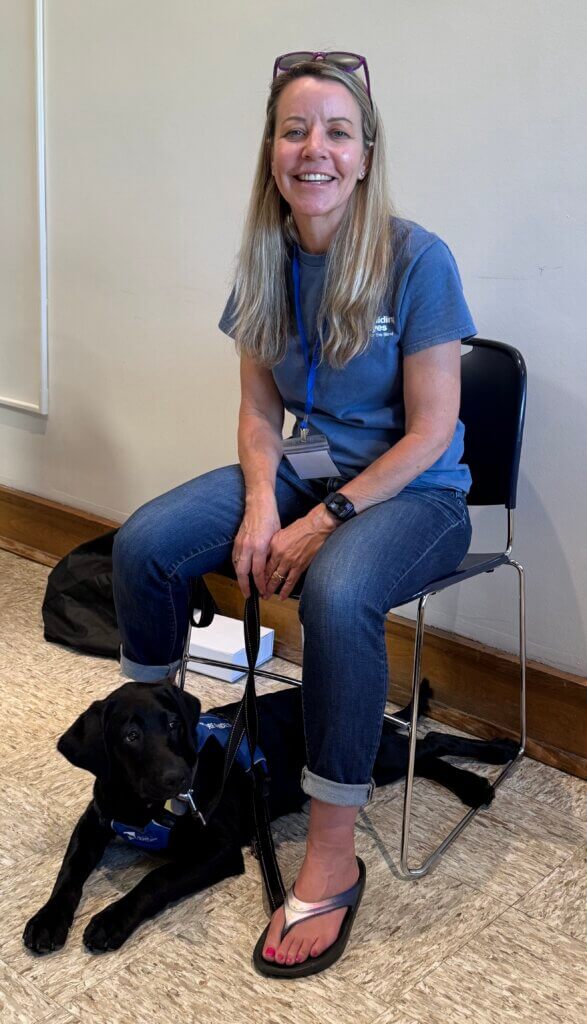
Earlier in my career when I was working as a Guide Dog Mobility Instructor at another guide dog school, I was completing a home placement with a dog I had trained.
The match was good. The dog was fully capable of doing this high-level work. But even though both of those things were true, I could see that he was becoming stressed.
The student had a fenced-in backyard, so we started experimenting with playing with balls and discovered that this dog absolutely loved a Jolly Ball. It was something the client could easily kick around the backyard for him. We also used a clicker to teach the dog to bring the ball back to the client’s feet, and he became really excited and engaged with the training itself.
We added some enrichment to his routine as well, including giving him part of his dinner in a food-filled toy.
Making space for more play and enrichment made a meaningful difference, and I left the placement confident in the team’s partnership.
That experience has stuck with me because the answer was not necessarily to ask less of the dog. He was capable of the work. We simply needed to understand more about what he needed outside of that work.
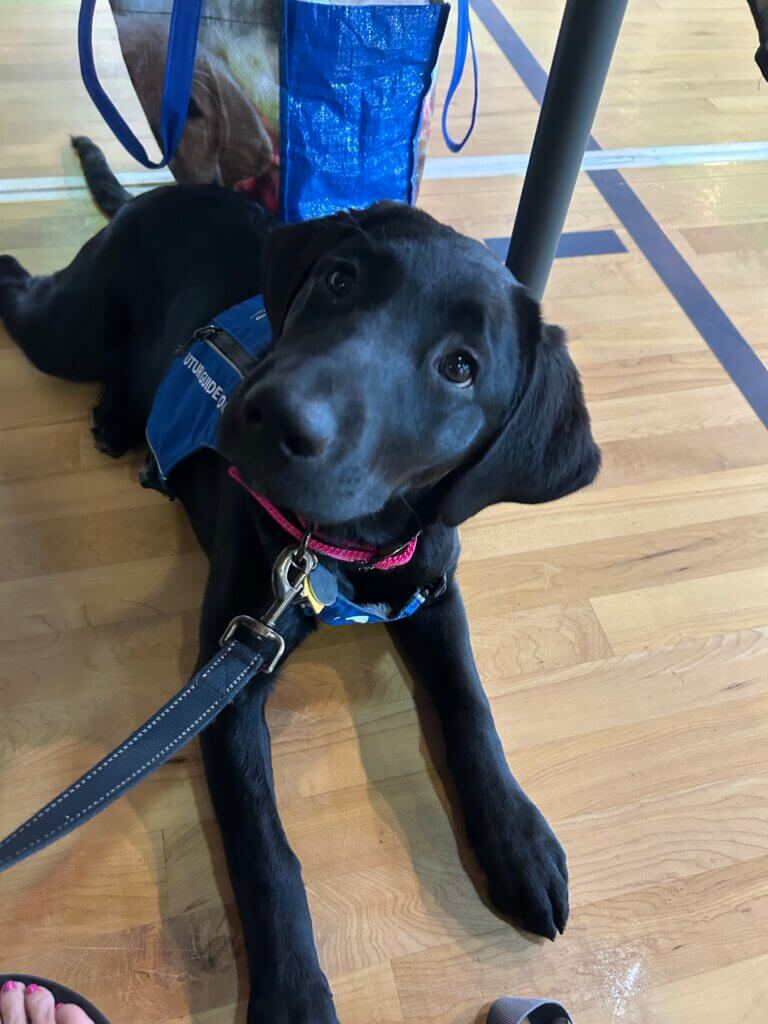
If there is one thing I would encourage people to take away from this, it is to learn what comes naturally to dogs and look for appropriate ways to make room for those behaviors in your own dog’s life.
We ask dogs to live in a world built around human routines, expectations, and rules. When you really think about it, that is a big ask.
There was a time in the guide dog world when sniffing was viewed simply as a bad behavior. But sniffing is not inherently bad. It is part of how dogs experience the world.
Good Dogmanship means remembering that the dog at the other end of the leash has needs, preferences, and instincts of their own.
So keep the walks, the training, the outings, and the routines. But make room for sniffing. For play. For rest. For choice.
Make room for your dog to be a dog.