Each year, the third Thursday of May marks Global Accessibility Awareness Day (GAAD). Join Guiding Eyes on May 21, 2026, in recognizing the importance of accessibility for our community.
We often notice accessibility in physical spaces: a public restroom or ramped entrance that accommodates wheelchair users, an accessible parking space, or a crosswalk signal that offers both visual and audio cues. The same principle applies online. Digital content should be intentionally designed so that everyone can access information.
According to the GAAD Foundation, an estimated one billion people worldwide live with a disability – whether visual, hearing, motor, or cognitive. Many rely on assistive technologies that help them navigate, and in the digital world, these technologies are only effective if the content itself is accessible. By removing barriers through tools such as screen readers, voice recognition software, and other assistive technologies, we create a more inclusive digital world for everyone.
To learn more about screen readers and accessibility from the perspective of blind users, explore a previous Global Accessibility Awareness Day blog post, written by graduates Melissa Carney, Community Outreach and Graduate Support Manager, and Meka White, Client Services Specialist. You may also want to visit our 2025 blog post, Global Accessibility Awareness Day 2025, which highlights five effective ways to enhance digital content and includes a quiz to test your “accessibility” knowledge. This year, we’re focusing specifically on Alternative Text.
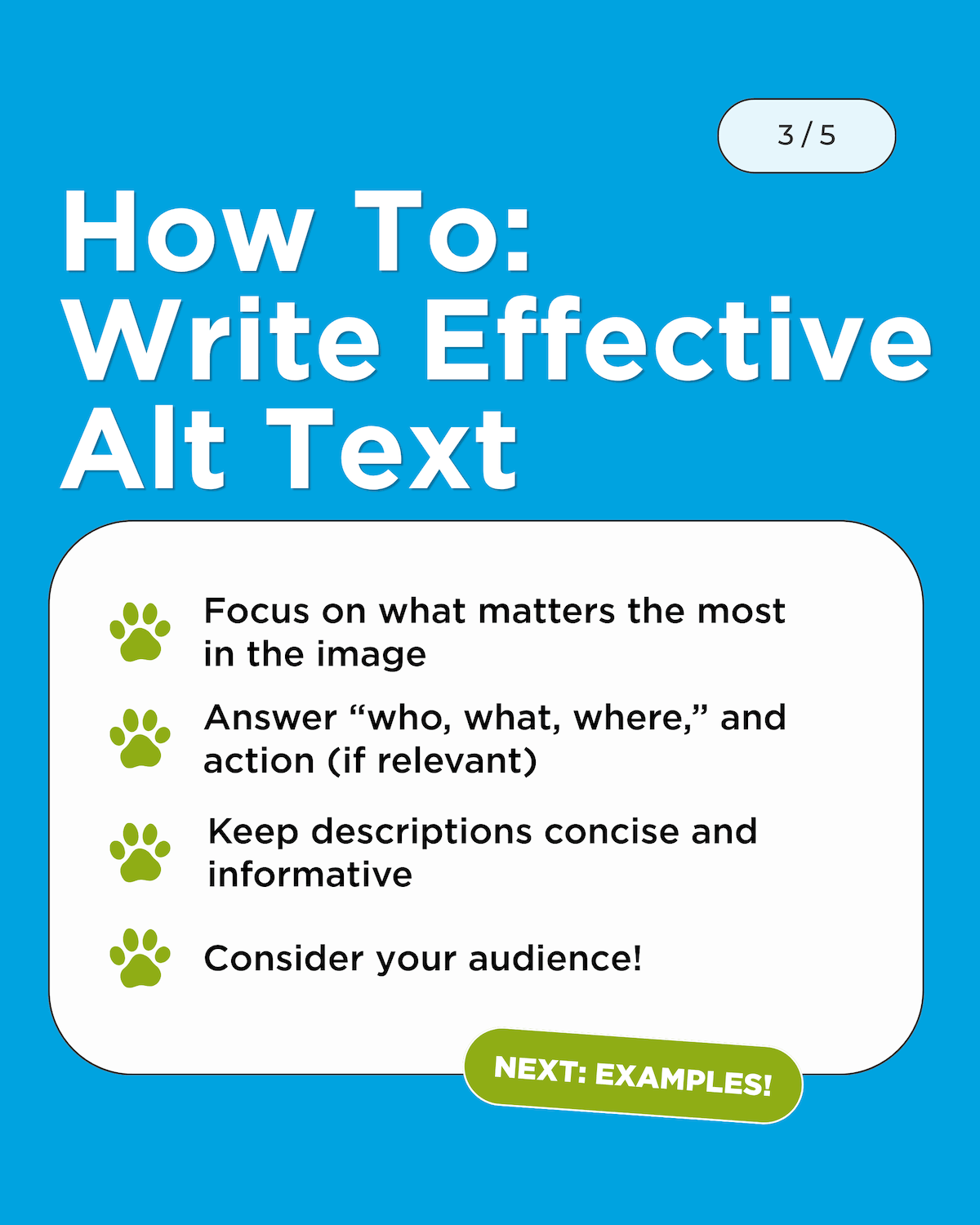
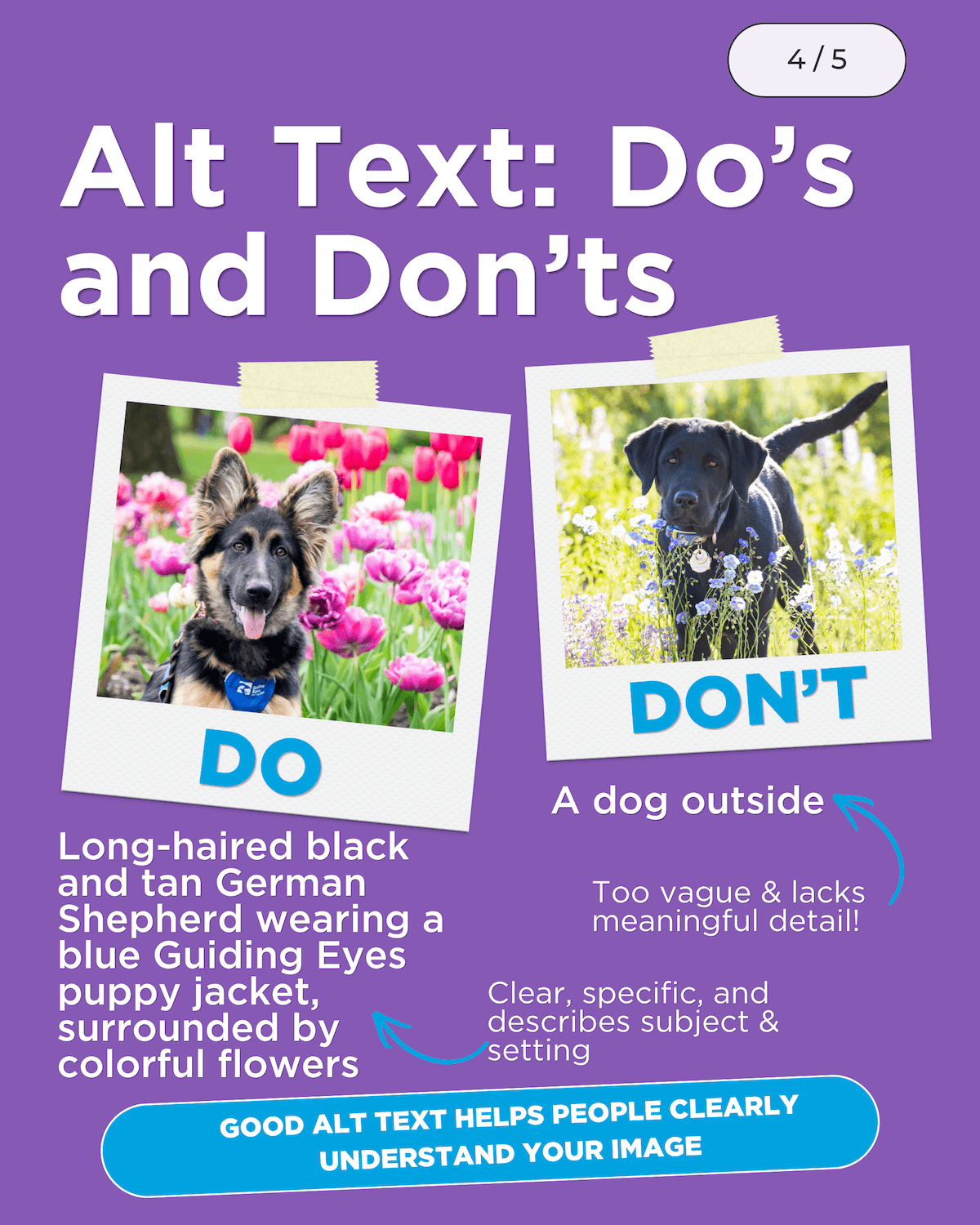
Alternative, or “alt,” text is a written description of an image that makes visual content accessible to people with vision loss. When you look at an image, how would you meaningfully describe it to someone who can’t see it?
Consider how you would explain: