
Inspired by the concept of “Good Horsemanship,” Good Dogmanship reflects the knowledge and awareness that come from paying attention to the individual dog in front of you, recognizing what they are communicating, and responding in ways that support their well-being and strengthen your relationship. Through this new blog series, we’ll explore everyday principles of Good Dogmanship and share practical insights from Guiding Eyes experts about building stronger, more thoughtful relationships with the dogs in our lives.
In this first installment, Guide Dog Mobility Instructor Allie Greenberg explores one important part of that relationship: speaking up for your dog.
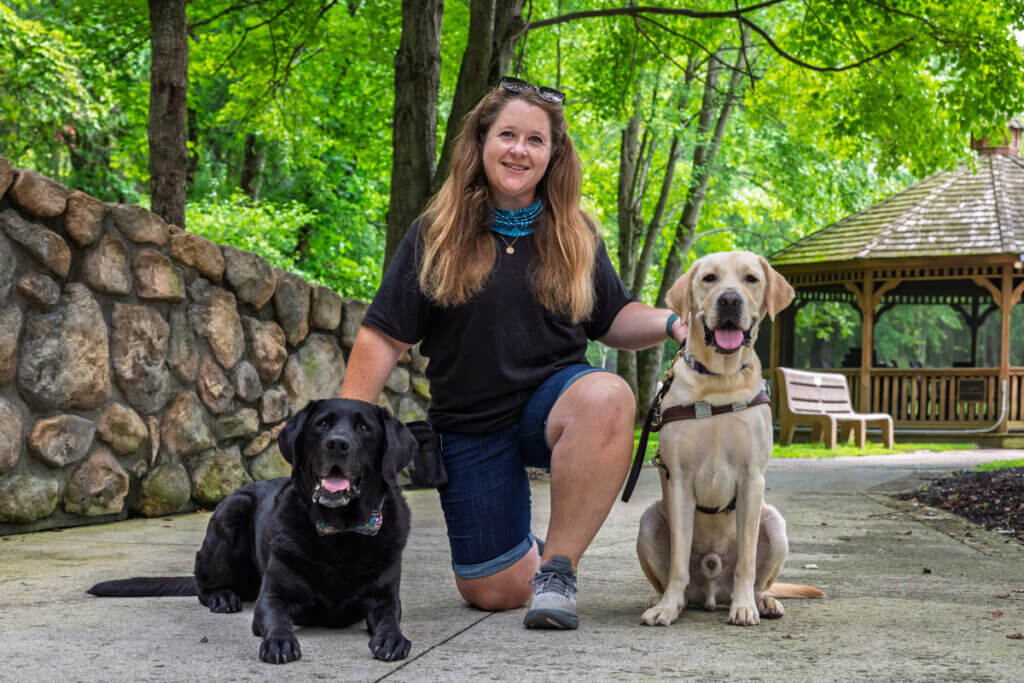
One of the most important things we can do for our dogs is also one of the simplest: pay attention to what they are telling us.
Dogs may not be able to tell us in words that they are uncomfortable, overwhelmed, or need a little more space, but they communicate with us all the time. As a Guide Dog Mobility Instructor, reading that communication is a big part of what I do. If a dog is telling me they are hesitant about something, it is my job to notice, respond, and, when necessary, speak up on their behalf.
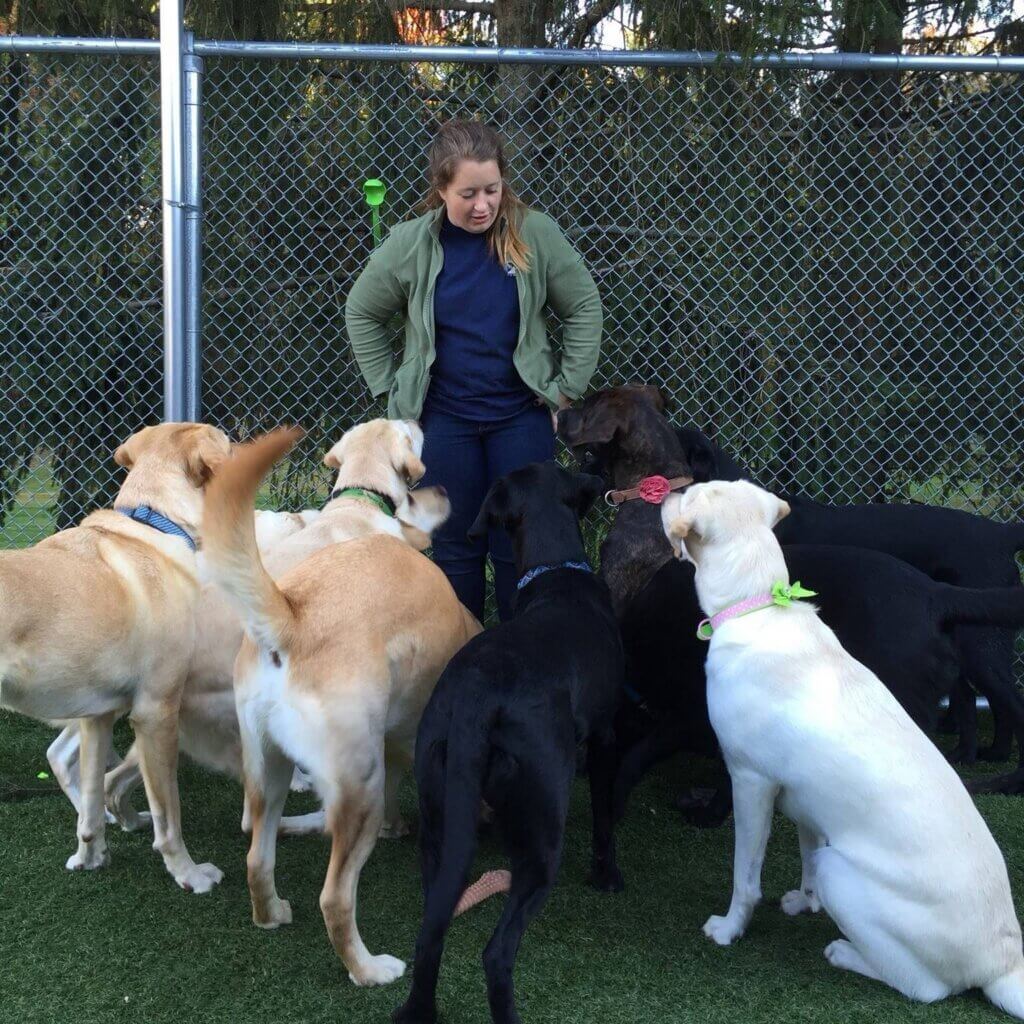
Every dog communicates a little differently, which is why knowing the dog in front of you is so important. Some signs of discomfort can be easy to miss. A dog might avoid looking directly at someone, lower their head or tail, lick their lips, yawn, or simply move away when someone is petting them. Other signals, such as growling or lifting a lip, may be much clearer.
The key is to not wait for the loudest possible signal before responding.
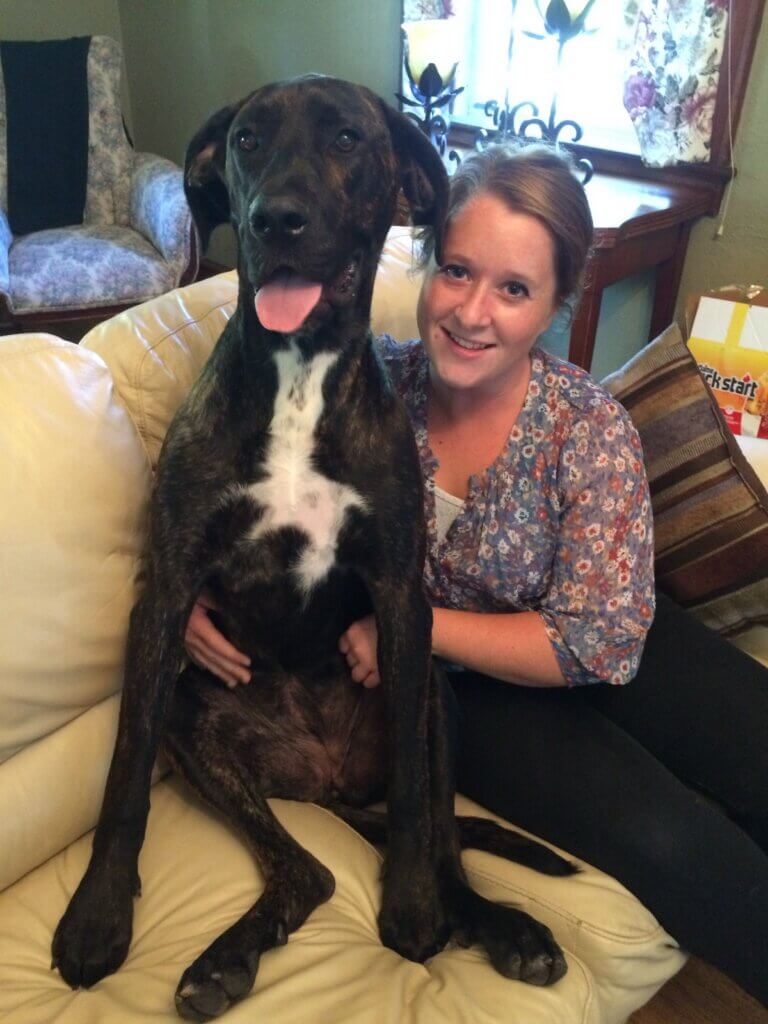
I learned this firsthand with one of my own personal pet dogs, a 130-pound Brazilian Mastiff/Great Dane mix named Maple. Despite her size, she could be fearful around unfamiliar people, particularly people who looked different from me or approached in ways that made her uncomfortable. Over time, I learned what her body language was telling me and how much space she needed to feel safe.
She learned to look to me when someone approached. It was almost as if she was asking, “You’re going to take care of this, right?” My job was to show her that I would. Sometimes that meant asking someone to give us more room or simply moving away from an interaction before she became more uncomfortable.
Because I understood her boundaries and spoke up for her, she knew she did not have to handle those situations on her own. She could trust me to help maintain the space she needed.
The public may not recognize your dog’s signals, and that is okay. You know your dog. When you notice that something is not working for them, you can take over from there and be their advocate.
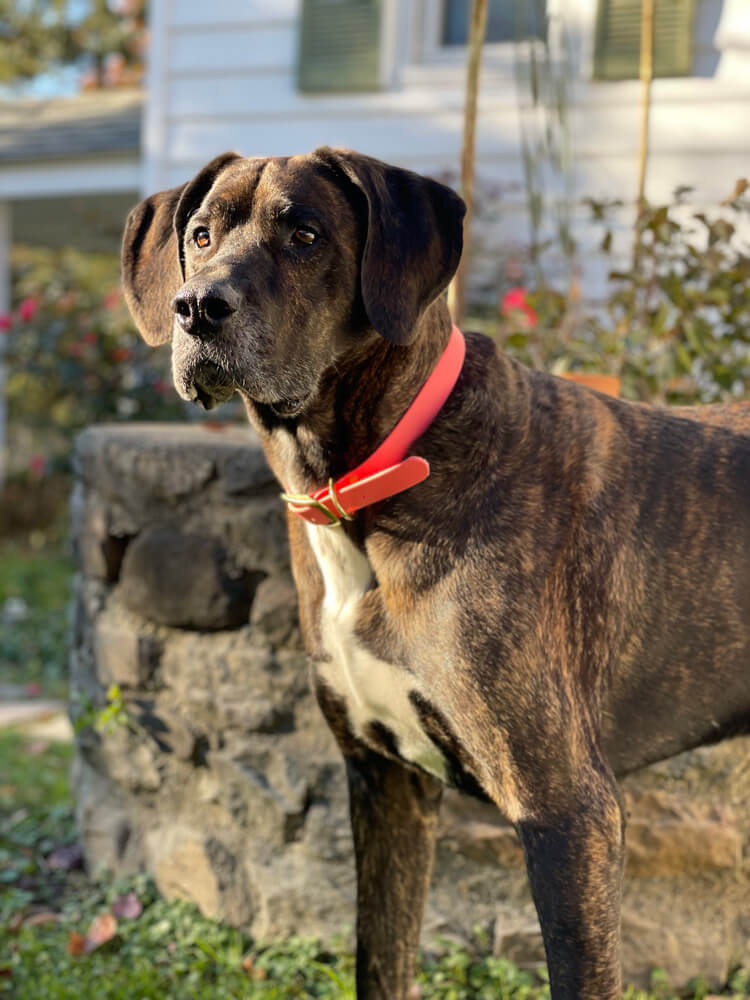
Speaking up for your dog does not have to mean being confrontational. In fact, I have found that one of the most effective approaches is to start with a little grace and then be very clear about what you and your dog need.
If someone is interested in your dog, you might begin with, “Thank you so much for asking,” and then follow it with a specific request, such as: “Would you mind giving us a little more space?”
Specificity matters. “My dog is uncomfortable” gives someone useful information. “Could you move a few feet to your left?” tells them exactly what they can do to help.
Making the situation black and white can make the interaction less stressful for everyone, including your dog. The person does not have to guess what you want, and your dog does not have to wait while everyone figures it out.
This is something I talk about with our Guiding Eyes students and graduates as well. Guide dogs naturally attract attention. Someone may see a handler and their dog walking down the street and feel drawn to that relationship. But the team may simply be trying to get to work.
When someone asks to pet a guide dog, a response can be as simple as, “Not right now, they’re in harness.” If the graduate has the time and wants to explain more, they can. But advocacy does not always have to become education. Sometimes, it looks like communicating your dog’s needs and moving along on your way.
Speaking up for your dog is not only about dogs who are nervous around people or other dogs. Even the most social dog does not necessarily need to greet everyone they meet.
With a working guide dog or a puppy learning the skills they will need for future work, part of advocacy may mean helping them understand that they cannot solicit attention from every passerby. A friendly dog may love saying hello, but that does not mean every interaction is useful or appropriate in that moment.
The same idea applies to pet dogs. Rather than assuming every greeting should happen, look at the circumstances. Is the person approaching in a way your dog seems comfortable with? Is your dog’s body language welcoming? Is the environment comfortable for your dog, or are they already overwhelmed? Sometimes the answer will be yes, and a greeting is perfectly appropriate. Other times, choosing to keep moving is the better decision.
Advocacy is about responding to the individual dog, not following one rule for every dog.
Finding the right balance when advocating for your dog can be tricky, and there are two common pitfalls to watch for.
One is pushing a dog too far. We sometimes have an idea of the dog we want. We want a dog who can go everywhere, meet everyone, and be comfortable in every situation. But the dog in front of us may be telling us something different.
When I adopted Maple, I wanted her to be the kind of dog I could bring anywhere and introduce to anyone. She made it very clear early on that she was not going to be that dog. I had to stop trying to fit her into the picture I had imagined and start paying attention to who she actually was.
The other extreme is holding a dog back so much that they never have the opportunity to experience the world, learn, or make choices within it. Training, thoughtful socialization, and positive experiences can make an enormous difference. Advocacy is not about deciding that your dog can never do something. It is about setting them up to experience things at a level they can handle and paying attention to what they tell you along the way.
There is a happy medium between pushing a dog through discomfort and avoiding every challenge.
Knowing you should advocate for your dog is one thing. Finding the words while someone is already reaching toward them is another. A few simple phrases can make those moments much easier:
You can also guide an interaction before it begins. If your dog tends to be more comfortable with certain types of greetings, tell the person your dog’s preference. You might ask them to turn slightly sideways instead of approaching head-on, or to pet your dog on the chest rather than reaching over the top of their head.
You do not have to apologize for knowing what your dog needs.
Some dogs gain confidence by completing a task successfully. Guide dogs tend to fall into this category. Others look more directly to the person they trust for reassurance and information. Either way, our responses matter.
When a dog learns that you are paying attention, that you will listen when they are uncomfortable, and that you will help manage situations they cannot manage themselves, you become a source of safety and consistency.
That trust can change how a dog moves through the world.
To me, this is how speaking up for your dog fits so naturally into Good Dogmanship. Good Dogmanship is built through the everyday choices that strengthen communication, understanding, and trust between people and dogs. Advocacy is one of those choices.
The better we become at reading our dogs and responding appropriately, the more comfortable they can feel exploring the world alongside us.
Sometimes, speaking up for your dog means giving them a chance to try something new. Sometimes, it means asking for three more feet of space. And sometimes, it is simply recognizing that the dog you have may be different from the dog you imagined.
The important part is that they know you are listening.